






Mada al-Carmel – The Arab Center for Applied Social Research held the fourth session of its seminar series “Urbicide in Gaza: Spatial Violence, Reconstruction, and Resistance” on June 18, 2026, on the theme of “In the Face of Urbicide: Spatial Reshaping and Practices of Resistance in the 1967 Occupied Palestinian Territories.” The event was moderated by Dr. Faiq Mari, an assistant professor in the Department of Architectural Engineering and Planning at Birzeit University.
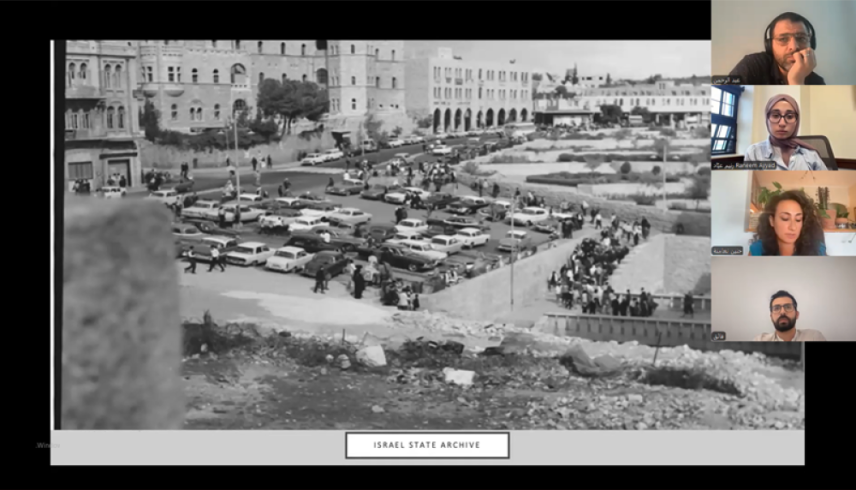
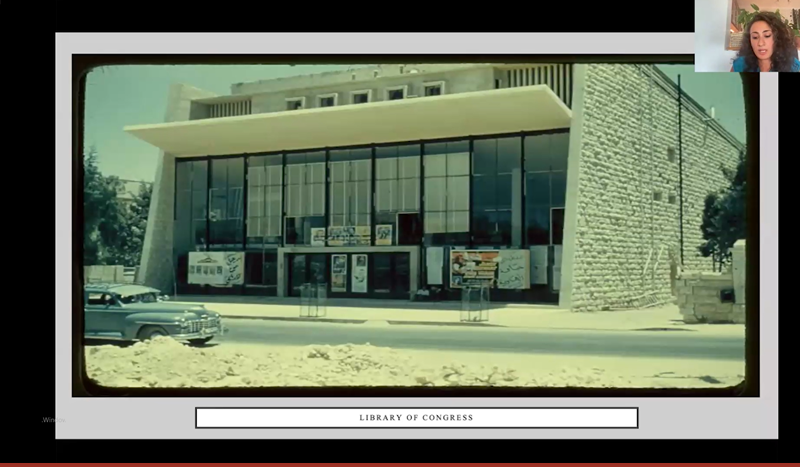
The seminar began with a presentation by Dr. Haneen Naamneh, a Palestinian writer and researcher, titled, “When Will You Open Damascus Gate? How Jerusalem Reshaped its Center after the Nakba (1948–1967).” Through a “virtual tour” of the streets and sites of Arab Jerusalem, she recounted the history of Arab Jerusalem between the Nakba (catastrophe) of 1948 and the Naksa (setback) of 1967, a period that has not received adequate attention in the field of Palestine studies compared to the city’s western neighborhoods that were occupied in 1948. The presentation outlined the ways in which the city’s residents and its “besieged municipality,” as Naamneh referred to it, reshaped the city center following the loss of its economic and administrative center and its urban structure with the Israeli occupation of 1948. Drawing on photographs, newspapers, and other archival documents from the period, Naamneh traced the transformation of the urban space in Jerusalem by detailing the social and economic changes that the area extending from Damascus Gate to Herod’s Gate and Salah al-Din Street underwent. She then explored how this area was reconstituted as an Arab urban hub teeming with commercial enterprises and cultural facilities, including cinemas and other cultural spaces that linked the new reality of the city with a broader national political imagination.
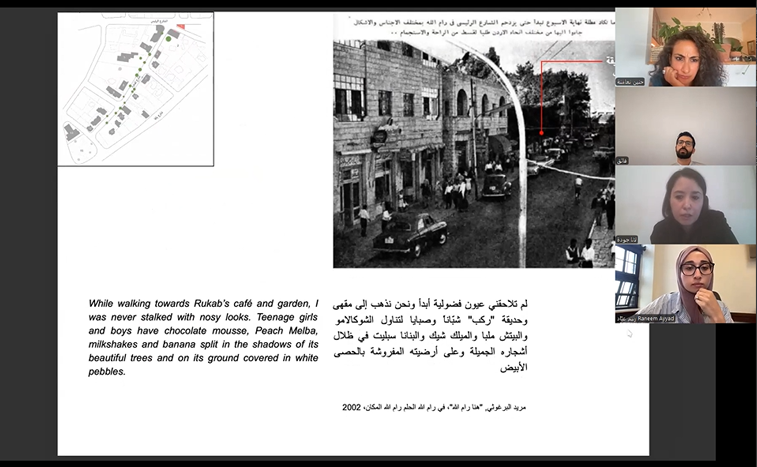
Through a tour of the streets of Ramallah, architects and researchers Lana Judeh and Raneem Ayyad gave a presentation on the subject of “Ramallah in the Mid-Twentieth Century: Reproducing Place after the Nakba.” In it, they addressed the transformations that Ramallah underwent following the settlement of thousands of displaced Palestinians who arrived from the Palestinian coast and Jerusalem, and how these shifts interacted with the city’s existing social fabric to reshape its urban and social structure. This included the materialization of a more diverse and distinct social fabric; the expansion of institutional structures, public services, and economic activities, as well as the appearance of new urban forms. The speakers further explained that, between the 1950s and its occupation in 1967, Ramallah was positioned within broader urban networks that stretched from East Jerusalem and Amman to other Arab capitals and the United States. This allowed for the reciprocal movement of people and capital, which was in turn reflected in several sectors, such as education and seasonal summer tourism.
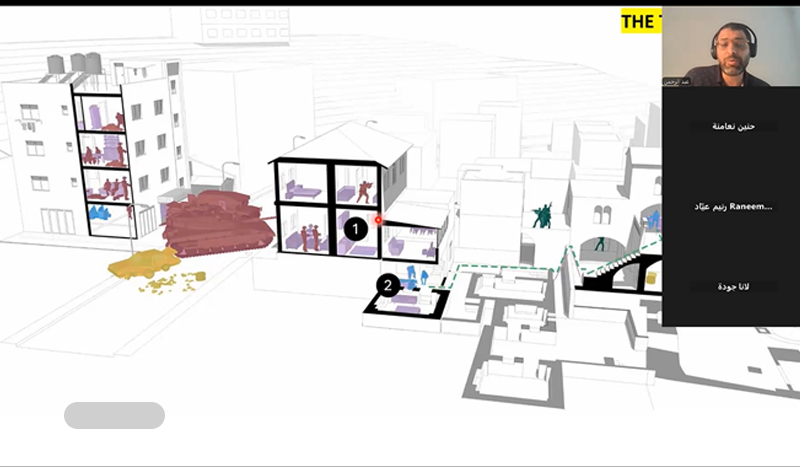
In contrast to the presentations on the restructuring of the city following the end of military operations, Dr. Abdalrahman Kittana, a researcher of architecture and urbanism, addressed conditions in the Old City of Nablus during the Israeli military invasion of 2002, as well as subsequent incursions. His presentation, titled “An Endless Alleyway: The Old City of Nablus and Practices of Survival and Resistance,” began with a “virtual tour” through the Old City’s alleyways and buildings. He discussed how the urban space of the city and its historical formation constituted a structural condition that allowed the Old City to become an incubator for practices of resistance and survival. Adopting a socio-urban perspective, Kittana examined how the urban fabric of the city enabled its inhabitants to remain steadfast and confront aggression, as reflected in their capacity to secure basic survival and meet the necessities of daily life. He concluded by clarifying that his presentation was not intended to provide a detailed and precise description of the Old City, but rather a simulation based on the core principles and rules that shape its urban and social structure. He noted that this choice was made out of concern not to give away detailed information that could potentially be exploited by the Israeli military establishment against the resistance among the city’s people.
The seminar closed with a discussion with the audience that covered theoretical, methodological, and ethical issues associated with the roles of social and institutional actors and their differing positions according to their class affiliations, and in particular the role played by municipalities as intermediaries between residents and higher-level institutions. The discussion also touched on the relationship between the urban and the social fabric, and the potential uses of simulation as a tool for understanding urban dynamics. It further included a methodological debate about the limits and potential of analyzing formal and informal modes of planning as an entry point for reading Palestinian urban space and its social and political dynamics.
To watch a recording of the session , click here
To watch a recording of previous sessions of the seminar, click here
To read the invitation, click here


العنوان:


