


This project conducts in-depth readings of seminal Arabic and Islamic texts in the fields of political science, sociology, history, and the humanities. The goal is to explore the intellectual and theoretical output offered by classical Arabic and Islamic texts up to the mid-20th century as they relate to the social, political, and cultural conditions of Arab peoples. This exploration probes the contribution that these texts make toward a deeper understanding of Arab societies through original texts and from within the Arab and Islamic cultural context. The Arab heritage has provided important texts in political science, sociology, and philosophy that are largely unknown to Arab students in Israeli academic institutions. These texts have the potential to broaden understanding of the evolution of Arabic and Islamic knowledge, its origins and research methodologies, as well as its capacity to enhance research writing by furnishing it with epistemological tools and approaches for the study of Arab societies across all fields. The workshop also introduces philosophical texts from the Arab intellectual tradition that address questions of ethics, justice, and governance, and seeks to integrate these themes into Palestinian thought and knowledge production within the Green Line. Specialist lecturers in the field will give lectures during the workshop.
Participants read important Arabic and Islamic texts to gain true insights into Arab societies and understand research methods in Arabic and Islamic studies. The workshop covered topics like ethics, justice, and governance related to Arab citizens in Israel, with expert lecturers offering support. It included four monthly study sessions at Mada al-Carmel in Haifa, starting on April 4, 2026. We received 35 requests for participation. The Academic Committee features Dr. Mohanad Mustafa, Rodayna Ghanem, and Dr. Areen Hawari.
First Session – April 2026 – Islamic Political Heritage
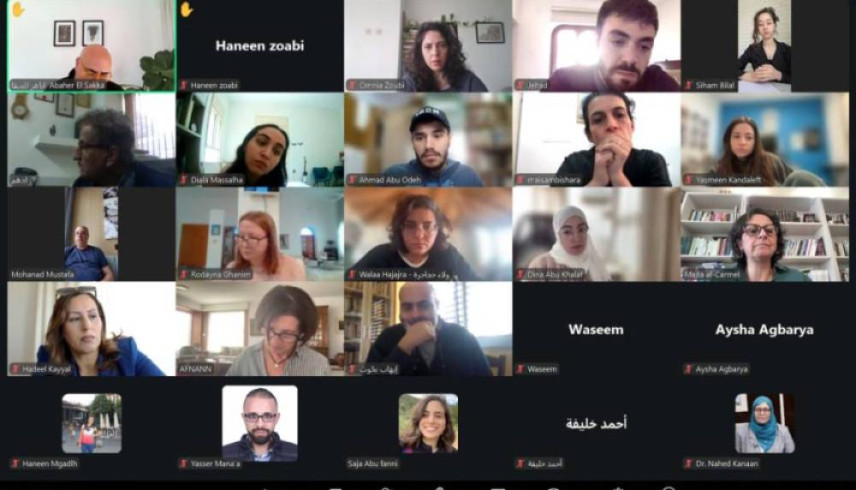
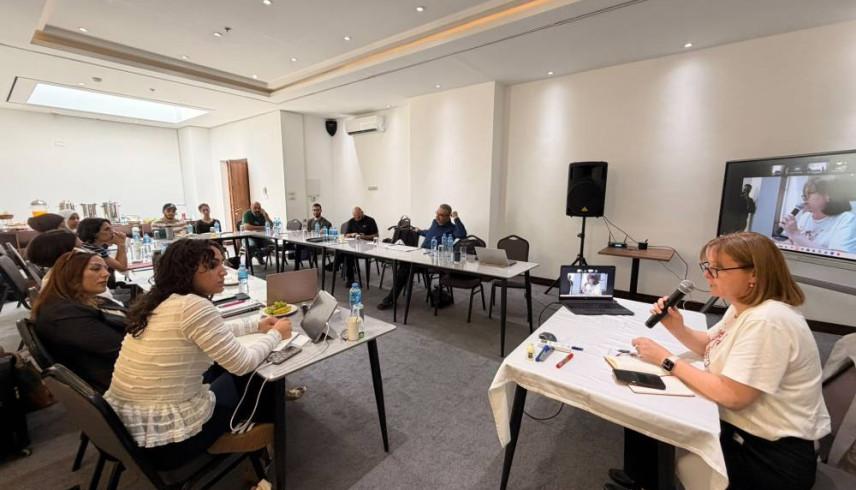
The session was conducted virtually due to the war on Iran and included two main lectures. The first, delivered by Dr. Mohanad Mustafa, a research fellow at Mada al-Carmel, was titled “On Reclaiming Knowledge: The Theoretical Field of Arabic and Islamic Texts.” In it, he discussed the challenges involved in reading the Arabic philosophical heritage and underlined the possibilities of reclaiming it as a living and productive field of knowledge. The lecture was followed by an open discussion with the audience.
The second lecture was given by Dr. Rudaina Ghanim, a researcher in the philosophy of science, on the subject of “Al-Ghazali’s Pathways to Seeking Truth: A Reading of Deliverance from Error.” She discussed the methodology of doubt and critical thinking in the work of Abu Hamid al-Ghazali, and their relationship to the development of scientific and critical thought.
Link to event’s summary in Arabic (only).
Second Session – May 2026
The session was conducted at Mada’s office in Haifa and opened with a lecture by Dr. Mohanad Mustafa that provided the framework for discussions about the emergence and development of the Islamic political tradition, and the historical and political factors that helped shape its central questions concerning governance, the state, political legitimacy, and managing conflict. The lecture also explored three major strands within this tradition: al-aḥkām al-sulṭāniyya (the literature on political governance), al-falsafa al-siyāsiyya (political philosophy), and al-siyāsa al-sharʿiyya (governance in accordance with Islamic law). In the second half of the session, participants presented selected texts by the scholars al-Mawardi, al-Farabi, and Ibn Taymiyyah, using them as a basis for discussion of the concepts of political stability, virtue, justice, and the legitimacy of political authority.
Third Session – June 2026.
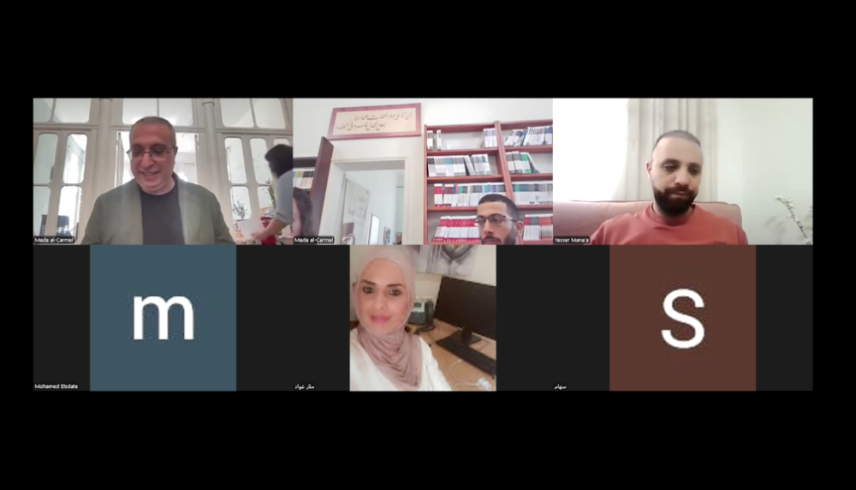
The session began with a lecture by Dr. Mohanad Mustafa on the subject of “Ibn Khaldun and Ibn al-Azraq: Approaches to Society and Politics.” This was followed by a lecture by Professor Abaher El-Sakka on “Sociological Approaches to Ibn Khaldun’s Muqaddimah,” and then another lecture by Dr. Taghreed Yahya, titled “Ali Al-Wardi and Arab Sociology: Foundations and Modernization.” The presentations addressed diverse concepts, in addition to issues relating to epistemic marginalization and the dominance of Western paradigms. The session concluded with a discussion on the possibilities of drawing on heritage to construct critical and contemporary Arab social knowledge.
Fourth Session – June 2026
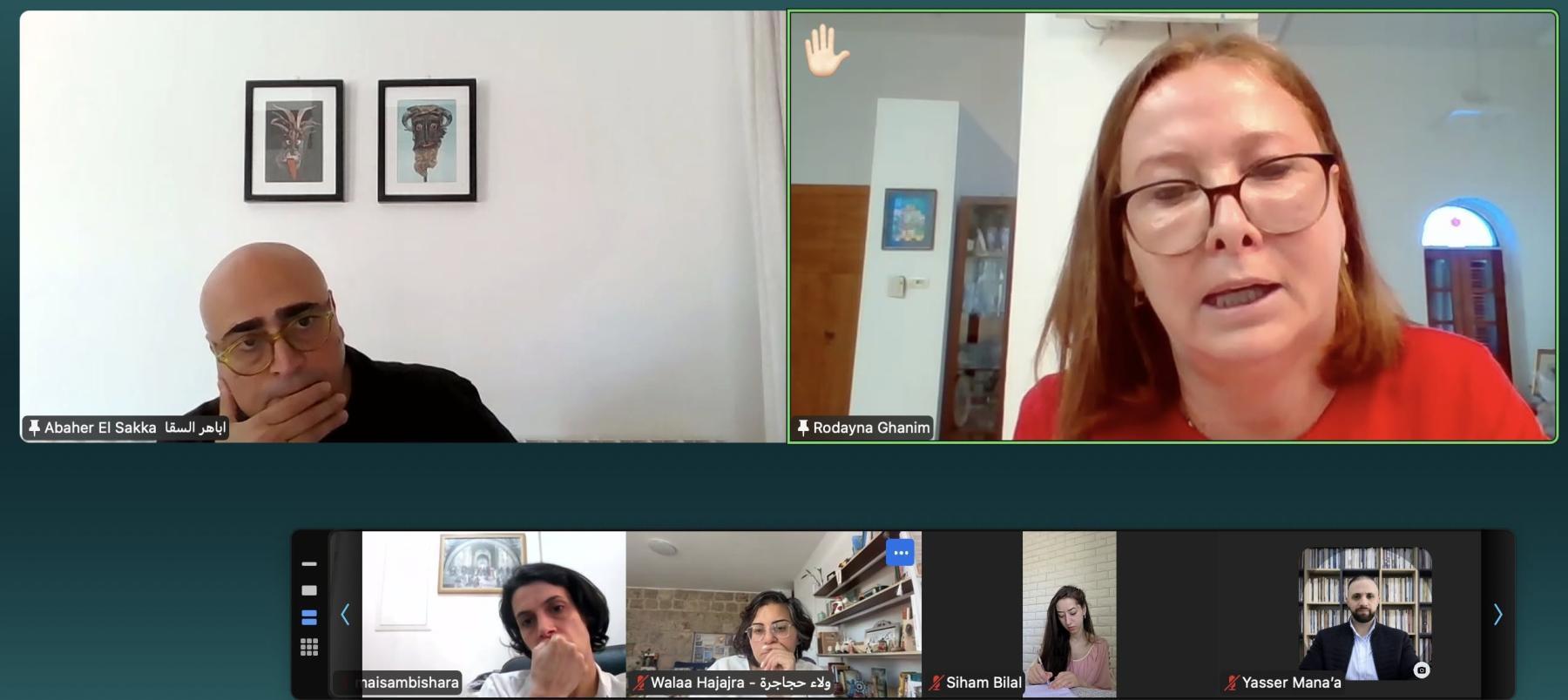
The fourth session took place in Ramallah on June 26-27 and focused on the Nahda, or Arabrenaissance, in the nineteenth century. It involved reading and discussing texts related to the reform movement among participants. The session began with Dr. Muhannad Mustafa's lecture on the historical context and key figures of the reform movement.
On the first day, discussions covered various reformist ideas, starting with the Salafi movement through thinkers like Muhammad Abduh and Rashid Rida, and moving to Westernizing reforms seen in the works of Rifa'a al-Tahtawi and Qasim Amin. Key topics included modern Europe's influence, education, progress, and traditional social structures.
The second day highlighted other reform currents, focusing on Khair al-Din al-Tunisi and Muhammad ibn Abd al-Wahhab, alongside the history of the Wahhabi movement. The session wrapped up with Dr. Mustafa discussing the ongoing relevance of the Nahda project into the twenty-first century, addressing challenges like authoritarianism and democracy. An evaluation session allowed participants to share their thoughts on the seminar.
Link to the summary in Arabic.

العنوان: